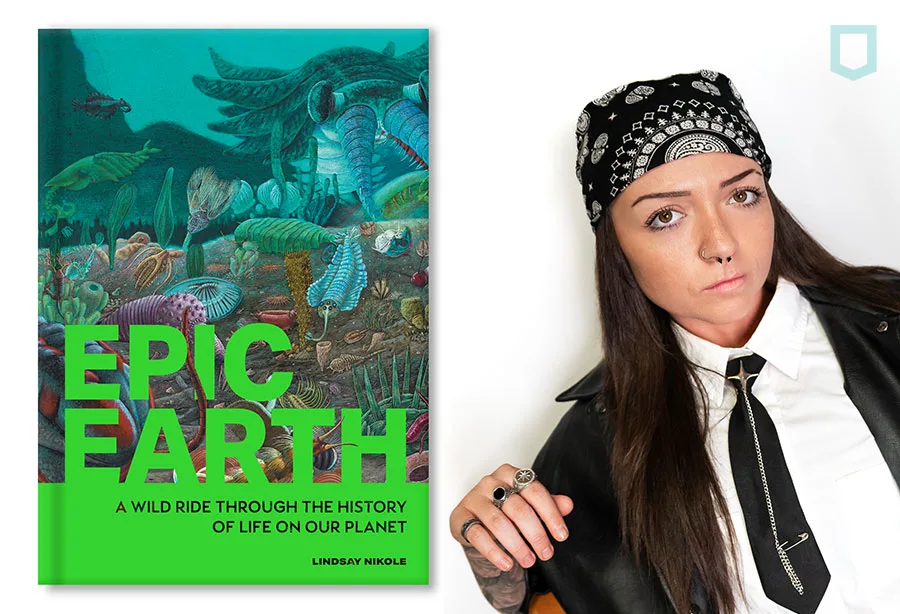
For zoologist and digital creator Lindsay Nikole, travel has been more than a way to see the world. It has shaped her understanding of ecosystems, deepened her commitment to conservation and given her some of the most powerful moments of her career. Her upcoming book
Epic Earth dives into prehistoric mysteries and the history of the planet, but much of her passion for storytelling comes from time spent on the ground in Kenya, Namibia and other landscapes where wildlife and people live side by side. In this interview, Lindsay reveals how travel shaped her work, what she has learned from conservationists around the globe and why seeing nature up close changes everything.
Lindsay Nikole Interview | Travel Pocket Guide
You have travelled to some remarkable places for your work. How has travel shaped your relationship with nature?
Travel changed everything for me. I grew up in Los Angeles, which is great in many ways, but it is not exactly full of diverse ecosystems. My understanding of wildlife was mostly from books and documentaries. When I started travelling to places like
Kenya and Namibia, I finally got to see those environments in person. Watching entire ecosystems interact in real time makes you appreciate nature on a completely different level. It gives you a sense of how connected everything is.
You spent time with Save the Elephants in Kenya. What was that experience like?
It was incredible. Seeing elephants in the wild is something you never forget. They are so intelligent and so emotional. What surprised me the most was the creativity behind the conservation work. One thing Save the Elephants discovered is that elephants are afraid of bees. So they helped communities build beehive fences around farmland. When elephants hear bees, they move away, which stops dangerous encounters. It protects the farmers and protects the elephants. That kind of solution shows how travel and research can combine to create something simple but life changing.
Namibia also played a huge role in your journey. What did your time with The Cheetah Conservation Fund teach you?
Namibia is one of the most beautiful places I have ever been. The landscape is stunning and you get to see how cheetahs fit into the ecosystem. At Cheetah Conservation Fund, I learned how complex and emotional conservation work can be. The team uses livestock guarding dogs to protect farms. The dogs scare away predators, so farmers do not need to harm the cheetahs. It is another example of a win win solution that you only really understand when you see it in action.
You also had one unforgettable wildlife moment while working there. Can you share it?
Definitely. I helped rehabilitate and release a brown hyena named Brownie. He had been caught in a trap on a farm and broke his leg. After helping care for him throughout his recovery, I got to help release him back into the wild. Watching him run into the distance after everything he had gone through was one of the most meaningful moments of my life. It was a reminder of why this work matters.
Your new book Epic Earth explores the history of our planet. How did your travels influence the stories you chose to tell?
Travelling helped me understand that every species and every ecosystem has a story. When you see those stories happening right in front of you, you realise how much history is layered into the world.
Epic Earth combines that sense of wonder with the scientific background I learned at
university. I wanted to show readers just how strange, amazing and interconnected our planet is.
You often highlight prehistoric animals in your work. Did travel affect how you think about Earth’s ancient past?
Absolutely. Seeing modern ecosystems helped me imagine prehistoric ones. For example, learning about the Tully Monster, which scientists still cannot classify as a vertebrate or invertebrate, reminded me that the world is full of mysteries. When you travel, especially to places that feel untouched, it is easier to picture how ancient environments might have looked and behaved.
So much of your work blends education with adventure. Why do you think travel is such a powerful tool for learning?
Because it puts your senses into the experience. You are not just reading about an animal. You are hearing it, smelling the environment it lives in, watching how it moves. Travel also exposes you to different ways people interact with nature. In some places, solutions to conservation come from tradition. In others, from innovation. You learn as much from the people as you do from the wildlife.
Your audience loves how you make science feel fun and welcoming. Does travel help shape your storytelling style?
Definitely. Travel teaches you how to observe. When you are paying attention to the sounds, behaviours and rhythms of a place, your storytelling gets richer. I want people to feel what I felt out there, even if they never travel to these places themselves. That is why I tell stories the way I do. I want them to feel immersive.
What destinations do you hope to explore next?
I really want to go back to Kenya and Namibia because I feel so connected to the conservation work happening there. I would also love to explore more of Africa in general. There is so much biodiversity across the continent and so many stories that deserve to be told. For now, I am working on a series about human evolution, which will eventually connect to places I hope to visit in the future.
What do you hope readers take away from your stories about Earth?
I hope they feel inspired. I want people to see how incredible this planet is, not just scientifically but emotionally. When you understand how everything fits together, you appreciate the world in a deeper way. And when you appreciate something, you want to protect it.
Follow Lindsay Nikole on socials: