When we think about sightseeing in Italy, we recall Rome’s Colosseum, the canals of Venice, the art in Florence, and the Vatican. But there are plenty of hidden spots that most tourists don’t know about. Here are ten secret places that will surprise you...
Amalfi
Amalfi is the heart and soul of the Amalfi Coast. It’s located just south of Naples. Rocky shores give way to secluded sandy beaches, and most of the houses are hidden on stone terraces where mountain vineyards grow.
Among the attractions, the Cathedral of St. Andrew the First-Called and the Emerald Grotto on the shores of Amalfi are impressive. If you like gambling, you’ll be disappointed. There are no casinos on the Amalfi Coast itself. The Amalfi Coast is more known for its stunning landscapes. But one evening, you can
try a new independent casino online. Amalfi is one of the few towns on the coast that has sandy beaches. Although they are quite small, you can still combine a sightseeing holiday with a beach holiday. However, at the height of the summer season it, can be quite crowded.
Cinque Terre
The Cinque Terre National Park unites five small towns, which together are considered one of the most picturesque hiking routes in western Italy. Monterosso, Manarola, Riomaggiore, Vernazza and Corniglia were once fishing villages, and today they are UNESCO World Heritage Sites. These towns are located on steep rock terraces and consist of colourful houses and vineyards. They are an amazing monument, connected by the Way of Love.
You can explore the park both by land and by water. Many excursion boats sail along the coast. While admiring the architectural monuments, churches, towers, fortifications, do not forget to look at the small secluded beach in Monterosso. The water here is amazingly clean and the beach itself is great for swimming.
Civita di Bagnoregio
The city is famous for its striking location atop a plateau of loose volcanic tuff overlooking the Tiber River valley. It is under constant threat of destruction as the edges of the plateau collapse due to erosion.
Civita di Bagnoregio cannot be reached by car. You will either have to walk from the Bagnoregio car park to the Civita bridge (it takes about 20 minutes) or take a yellow minibus for 1 euro (pay the driver) from the gas station to the foot of the pedestrian path.
Stresa and the Borromean Islands
Stresa is considered one of the most beautiful small towns in Italy, largely due to its location. Sandwiched between the mountains and Lake Maggiore, Stresa boasts amazing natural landscapes. In addition, tourists have plenty to do here. You can take the funicular to the top of Mount Mottarone, visit the local Alpine Botanical Garden, take a boat ride to the Borromean Islands, or visit one of the many villas in the area.
The Borromean Islands, located on Lake Maggiore not far from the shores of Stresa, also deserve special mention. These islands are connected by a water excursion route. Here you will see luxurious palaces, parks, and peacocks peacefully walking on the lawn.
Alberobello
In the southern region of Puglia lies the whimsical village of Alberobello. It is famous for its conical-roofed trulli houses. These whitewashed limestone buildings look like they’ve come straight out of a fairy tale. A stroll through Alberobello’s winding lanes feels otherworldly,It’s a UNESCO World Heritage site, yet remains a hidden treasure off the beaten path.
Turin
Turin is a luxurious baroque city with many architectural attractions and unique museums. Here are the Royal Palace, which is the residence of the Savoy dynasty and a UNESCO World Heritage Site, the Turin Cathedral and the Picture Gallery, which houses works by Italian and Dutch masters.
You should also definitely visit the Valentino Castle, the Antonelliana Tower, the Basilica of Superga, and the Madama Palace. Turin also has numerous museums. Some of them are quite original, such as the Martini Museum.
Bergamo
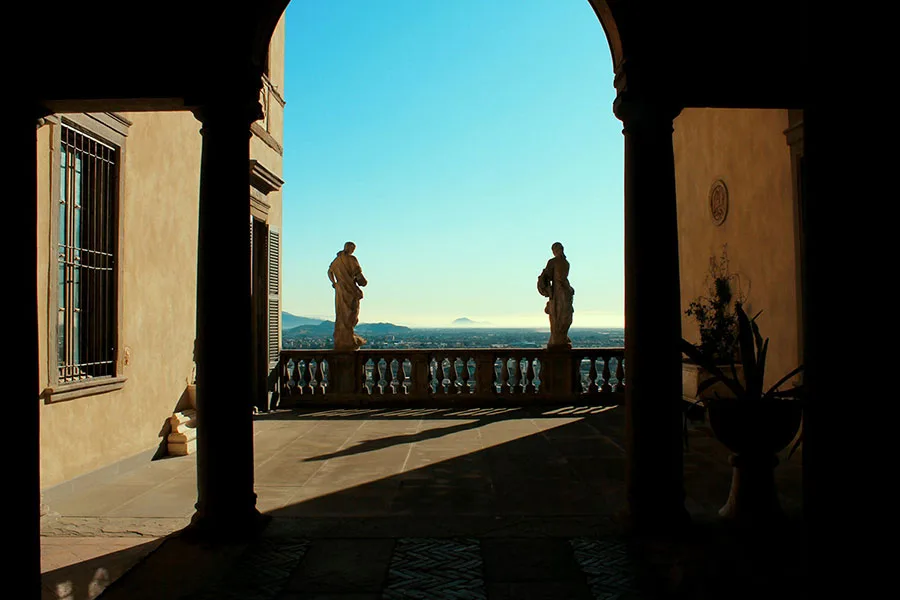
Bergamo is a mix of man-made and natural attractions. It is located in the foothills of the Alps and surrounded by picturesque landscapes. And the La Rocca castle, the Bergamo Cathedral, the Basilica of Santa Maria Maggiore, medieval towers and lushly decorated palazzos create a unique atmosphere inside the city.
Bergamo's location makes it a convenient starting point for further travels in northern Italy. From here you can go to Lake Como or Lake Maggiore, as well as visit the historic city of Brescia and explore the mountain routes of the Dolomites.
Limone sul Garda
The picturesque town of Limone sul Garda is located on the northwestern shore of Lake Garda. Getting here is not so easy, but it is worth it.Huge overhanging cliffs, the blue lake, houses decorated with the symbol of the city - lemons - all this distinguishes this small but atmospheric town from others.
In Limone, you should definitely visit the Casa della Finanza and the Palazzo Chepardi, the Church of San Rocco and the Cathedral of San Benedetto. It is also worth walking through the Limone greenhouse, where lemon and olive trees grow.
It is also convenient to take boat trips from the town. You can, for example, go to the small but extremely picturesque town of Malcesine, which is located on the opposite bank of Garda, or get to the northernmost point of the lake - the town of Riva del Garda.
Montecatini Terme
When the beach season in Italy ends, Montecatini Terme continues to welcome tourists, because you can swim in the healing waters of the thermal springs all year round. It is also worth visiting the old part of the city, which has many historical monuments. In addition, from Montecatini you can easily go for a few days to neighbouring Pisa, Lucca and Florence.
Matera: City of Caves
Matera is one of the world’s oldest continuously inhabited cities. The historic centre of this city is not built, but entirely carved out of limestone. Locals call it "Sassi", which means "rock" or "stone" in Italian. All the Sassi are a single labyrinth: connected by stairs and narrow alleys.
Once upon a time in ancient times, these neighbourhoods were inhabited by the city's poor, who carved out their homes from caves and grottoes and furnished them as best they could. These were real houses, with sewerage, windows and doorways. The settlement grew up on the slope of the La Gravina gorge during the Greek domination of this land. Later, they were replaced by the Romans, who surrounded the city with a wall and began to build houses right in the rocks.