It's no secret that the health care industry is experiencing shortages. Some communities are so underserved that they are forced to import nurses from all over the country. Travel positions allow you to make more money—sometimes almost twice the typical rate—as long as you're willing to move a few times a year to high-need communities.
Obviously, this work isn't for everyone, but if you find it appealing, it can be a great way to help the most in-need communities while also inflating your salary a bit.
Travel Nurse Qualifications
While many specialty nursing positions require either an advanced practice degree or specialized certification, travel nursing is a little bit different. You can do this work with a BSN, but you will most likely also want to get a compact nursing license.
A compact nursing license is usually achievable simply through application. What it does is prescreen you to work in almost every state in the nation. For travel nurses, this means that you won't have to individually apply to the state regulatory board every time you need to move.
Travel nurses are also generally a little more experienced and will often have two to three years minimum of field experience. Aside from these basic qualifications, the work is open to any BSN recipient in good standing.
Are Travel Nursing Jobs Hard to Get?
Travel nursing positions can be competitive. Any healthcare career can be. That said, the odds of a qualified nurse in good standing finding work in this field are high. If you have a few years of experience under your belt, you should find that there is no shortage of opportunities available.
Travel nursing has scaled back a little bit since the pandemic, when demand was through the roof. The average contract lengths have shortened a bit, and there have even been grumblings that the world of travel nursing is “dead.”
Is that so?
Not at all. Here is what actually happened. In 2019, there were around
50,000 travel nursing jobs in the United States. Over the course of a few months in 2020, that number doubled. It seems like there was a good reason for that, but this far out, who can remember why?
What’s happened in the intervening years is that the demand for travel nurses has shrunk back to pre-pandemic norms. The job is not at all going away. It’s just not exploding the way it was a few years ago.
What Do Travel Nurses Do?
The role of a travel nurse depends partially on their placement. For example,
faith-based nursing placements function a little bit differently from a neonatal nurse working in a secular hospital.
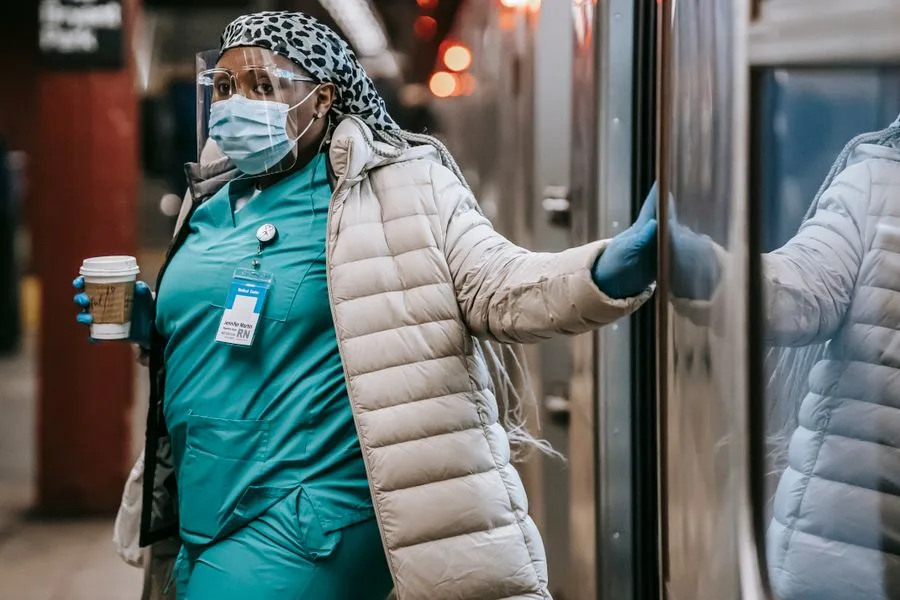
That said, the overall responsibilities will be entirely familiar. You're nursing the same way you would at your home hospital. The only difference is that you're doing it hundreds of miles away, with a staff of nurses you've just met and will only know for a matter of months.
Where Do Travel Nurses Go?
It really depends on
where there is the greatest need. During the pandemic, many travel nurses were delighted to find they could get placements working within their home communities. In these situations, they were making twice as much as other local nurses while technically still satisfying an acute regional need.
Most of the time, however, travel nurses are going far from home to wherever they are needed the most. Many people imagine overcrowded, underfunded urban hospitals, and certainly, this is a possible placement. However, an even more common experience is placement in rural hospitals.
Rural communities are very underserved by the health care industry, primarily for logistical reasons. The majority of nursing students graduate and then go back to work in their own communities. In a town of 1,200, that will mean they might only get one or two new nurses every five years. Rural hospitals can't rely only on sourcing local talent, and so they often rely heavily on the services of travel nurse agencies.
Is Travel Nursing Right for You?
We've already described the benefits of this work: high-impact nursing for an extremely competitive salary, the ability to see new places and experience new things. These aspects of travel nursing can be very exciting. But there are obvious drawbacks as well.
One of them is that you need to be willing to move a lot. Obviously, this will create isolation from your friends and family back home. It also makes it a lot harder to establish lasting professional relationships.
Travel nurses frequently have a hard time making meaningful friendships on the job because they often only work with people for a few months at a time before moving on. These factors can wear a person down over time.
On the flip side, the short-term nature of their placements, along with their higher-than-usual salary, allows some travel nurses to be more selective with how and when they work.
For example, a travel nurse may decide to take the summer off after having worked the spring and winter. They have both the financial and personal flexibility to do this, thanks to the short-term nature of their work.
Think Travel Nursing Might Be for You? Give It a Try
While not everyone will be a good fit for this unique position, it is very important and impactful health care work that can be deeply enjoyable for the right candidate. If you are attracted to the idea of seeing new things and making great money, start looking into travel nursing positions. By very definition, the work is in high demand, and you should find that there are lots of available opportunities once you start looking.